Protecting Urban Water Bodies Requires a Year Round Approach


Ganesh Chaturthi is one time when our attention naturally turns towards lakes and other water bodies. We talk about idol immersion, water quality and ways to reduce pollution.
These conversations are important. But the pressure on our water bodies does not begin or end with the festival.
Throughout the year, untreated or inadequately treated sewage, solid waste, runoff and, in some places, industrial discharge can enter urban water bodies. Over time, this can affect water quality and the aquatic life that depends on it.
What Happens to Water Quality?
When different pollutants enter a lake, we need to understand how they are affecting the water. A few common indicators help us do that:
Dissolved Oxygen (DO): Tells us how much oxygen is available in the water for aquatic life.
BOD and COD: Help us understand the oxygen demand created by organic and other oxidizable matter.
TSS: Tells us about suspended particles that can affect water clarity and quality.
pH: Shows whether the water is acidic or alkaline

The Central Pollution Control Board (CPCB) includes these and other parameters in its guidance for monitoring water quality around idol immersion.
Monitoring tells us what is happening in the water. But protecting a lake also means reducing the pollution entering it in the first place.
Protecting Urban Water Bodies Cannot Stop After the Festival
During Ganesh Chaturthi, using suitable materials (Natural clay idols), choosing designated immersion areas and properly collecting waste can help reduce pressure on natural water bodies.
But once the festival is over, other sources of pollution continue.
This is where year-round wastewater management matters. Wastewater needs to be collected and treated before it reaches our lakes and rivers. Sewage treatment plants need to work properly, water quality needs to be monitored, and treatment systems need regular operation and maintenance.
Where treated wastewater meets the required quality for a suitable use, it can also be reused.
The connection is simple:
Prevent Pollution → Treat Wastewater → Monitor Water Quality → Reuse Where Suitable → Protect Water Bodies
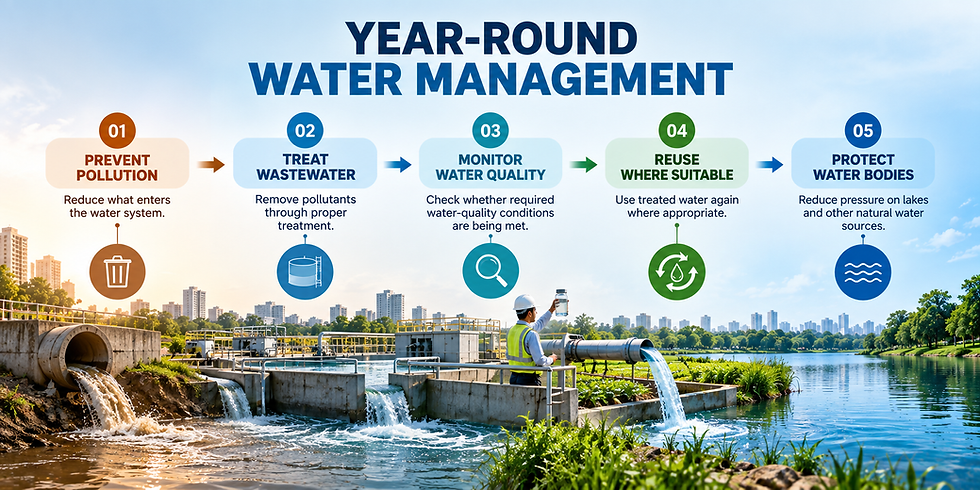
Ganesh Chaturthi helps focus attention on our lakes, but protecting them requires action throughout the year.
A lake cannot be protected for a few days and neglected for the remaining months.


I agree that protecting urban lakes requires consistent effort rather than just attention during festivals. Proper wastewater treatment and regular monitoring can make a real difference, and when taking a short break from reading about environmental issues, I sometimes enjoy playing Pokebonk!
More than just a form of entertainment, Subway Surfers helps players hone their powers of observation, quick reflexes, concentration, and decision-making skills under pressure—since a single moment of inattention or a misdirected swipe can cause the character to collide with a train, bringing an end to the player’s current run.
This passage makes a good point dinosaur game about how important it is to take care of lakes and other bodies of water all year, not just during Ganesh Chaturthi.
Deer Adventure offers a welcome escape from games that constantly demand high scores or flawless performance. Its eccentric atmosphere makes the experience more about curiosity, amusement, and personal discovery. Coolgamesfree helps players find an entertaining alternative when they want to relax without competitive pressure.
I think this excerpt raises an important point about protecting lakes and other water bodies throughout the year, not just during festivals like Ganesh Chaturthi. Reducing pollution requires consistent efforts to manage waste, treat sewage, and protect aquatic life. I also enjoy playing Veck IO in my free time because it gives me a fun way to relax while taking a break from reading about environmental issues.